
The Future of Enterprise Intelligence: Dynamics 365 and the 2026 Autonomous Workflow Revolution
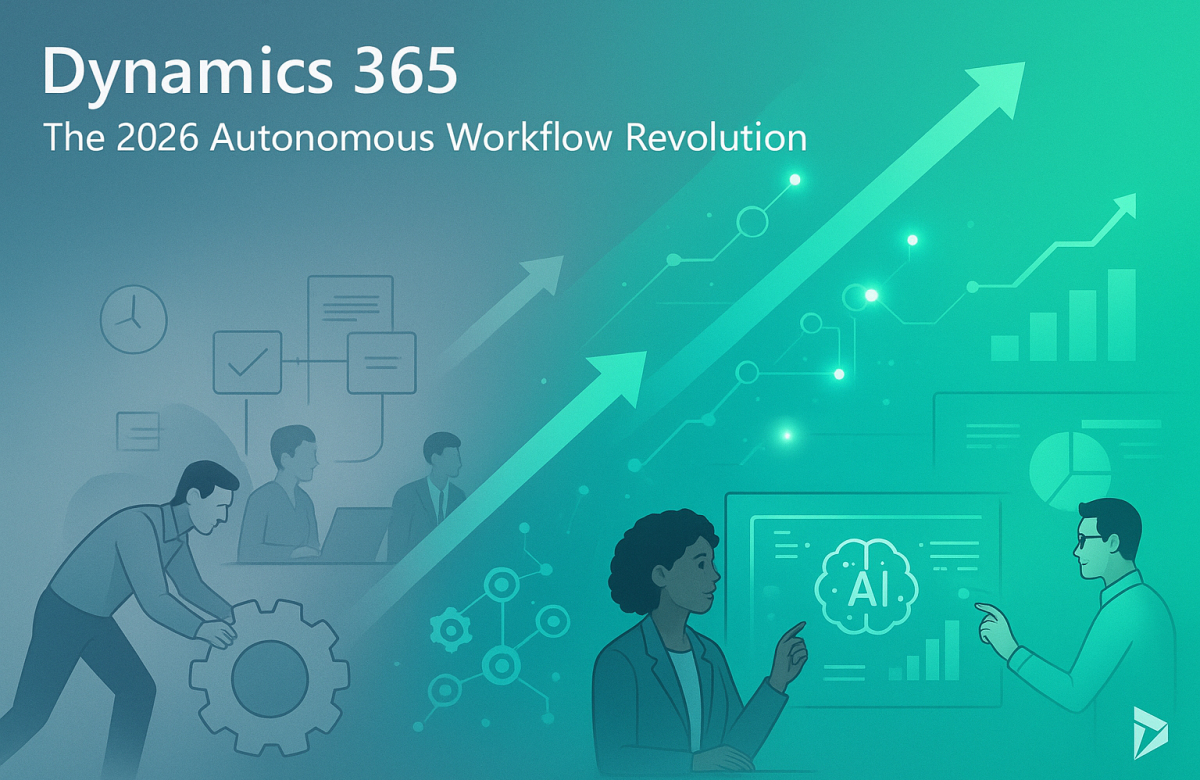
The modern enterprise faces an unprecedented challenge: managing growing operational complexity while maintaining agility and competitive edge. Organizations generate enormous volumes of data daily yet struggle to extract meaningful intelligence from it. This is where intelligent automation becomes a game-changer. At Vaden Consultancy, we’ve witnessed first-hand how embedded machine learning capabilities within Dynamics 365 empower businesses to eliminate bottlenecks, enhance decision-making speed, and unlock untapped productivity reserves.
The Evolution of Business Automation
Decades ago, automation meant rules-based systems and rigid workflows. If X occurs, then Y happens—simple, predictable, and limited. Today’s intelligent systems operate differently. They learn from patterns, adapt to variations, and anticipate scenarios without explicit instructions. This fundamental shift represents a departure from traditional automation into cognitive computing, where systems understand context, recognize nuances, and make sophisticated judgments.
Within Dynamics 365, this intelligence manifests through several integrated capabilities that fundamentally reshape how organizations approach their core processes. Where Intelligent Capabilities Create the Most Impact
Dynamics 365 CRM: Intelligent Customer Relationship Management
Revenue Stream Optimization
Sales teams traditionally spend considerable time on administrative tasks: lead scoring, pipeline analysis, meeting preparation, and communication drafting. Intelligence capabilities within Dynamics 365 Sales dramatically alter this dynamic. The platform can analyse prospect behaviour, engagement history, and organizational patterns to identify which opportunities warrant immediate attention versus those requiring continued nurturing.
Rather than generic email templates, machine learning systems craft contextually relevant communications tailored to individual prospect circumstances and communication preferences. Sales representatives transform from data managers into strategic consultants, dedicating their expertise to relationship building and complex negotiations where human judgment remains irreplaceable.
2026 enhancements will enable Dynamics 365 Sales to autonomously qualify leads, schedule meetings with prospects, and even conduct preliminary discovery conversations through intelligent chatbots—allowing sales teams to focus exclusively on high-value relationship development and deal closure.
Service Excellence Through Predictive Support
Customer service environments generate constant streams of interaction data—tickets, conversations, resolutions, and outcomes. Intelligent systems within Dynamics 365 Customer Service process this institutional knowledge to anticipate customer needs before they escalate into major issues. When a service ticket arrives, the system immediately understands the probable root cause based on historical patterns, suggests relevant knowledge articles to the support representative, and recommends optimal resolution pathways.
Beyond reactive support, predictive intelligence identifies customers at risk of dissatisfaction, flagging them for proactive outreach. Customer Service representatives receive Copilot-generated responses that maintain brand voice while addressing specific customer concerns—dramatically reducing first-response time while improving resolution quality.
This shifts the service paradigm from “responding to problems” toward “preventing problems from manifesting.” By 2026, Dynamics 365 Customer Service will resolve 60-70% of routine inquiries through fully autonomous intelligent agents, allowing human representatives to concentrate on complex, emotionally nuanced situations requiring empathy and judgment.
Marketing Precision and Campaign Optimization
Dynamics 365 Marketing combines customer data with intelligent analysis to deliver campaign effectiveness unprecedented in traditional marketing operations. The system automatically identifies high-propensity customer segments, personalizes messaging based on individual preferences and behaviour history, and optimizes send timing to individual recipients based on their demonstrated engagement patterns.
Rather than broad-brush campaigns reaching everyone identically, intelligence enables micro-segmentation where messaging, offers, and communication channels adapt to individual context. Marketing teams shift from managing campaigns toward managing customer journey orchestration—with systems handling routine execution while marketers focus on strategy and creative vision.
Dynamics 365 Business Central: Intelligent Operations for Mid-Market Organizations
Streamlined Financial Operations
Business Central brings integrated financial intelligence to organizations that previously lacked sophisticated ERP capabilities. Intelligent systems automate traditional finance bottlenecks: invoice processing becomes intelligent with automatic vendor matching, receipt validation, and anomaly detection; bank reconciliation accelerates through machine-learned matching rules recognizing transaction patterns across complex accounts; period-end close processes compress dramatically as routine reconciliation items complete autonomously.
The platform’s intelligence learns from historical transaction patterns to flag high-risk payments before execution, protecting cash reserves while accelerating cash-to-close timelines. Finance teams receive Copilot-generated explanations for complex reconciliation items, automatically generated audit-ready narratives, and real-time variance explanations—transforming month-end from administrative grind into strategic analysis opportunity.
By 2026, Business Central will autonomously execute standard adjusting entries based on business rules, automatically generate financial statements with predictive variance analysis, and flag emerging financial risks days or weeks before they materialize in traditional reporting.
Inventory and Procurement Intelligence
Mid-market organizations frequently struggle with inventory optimization—either maintaining excessive stock consuming working capital, or experiencing stockouts disrupting customer commitments. Business Central’s intelligent systems continuously analyse demand patterns, supplier lead times, seasonal variations, and historical volatility to recommend optimal stock levels specific to individual items and locations.
Procurement processes accelerate through intelligent systems that identify best-value suppliers based on quality history, delivery reliability, and pricing trends; automatically generate purchase orders when inventory triggers activate; and flag procurement risk scenarios—supplier financial instability, quality degradation, or emerging market disruptions—enabling proactive supplier relationship management.
This intelligence particularly benefits small-to-mid-market operations lacking dedicated supply chain management teams. A handful of procurement professionals leverage intelligent systems to manage complex supplier networks, inventory optimization, and supply chain resilience that previously would require substantially larger teams.
Integrated Operational Insight
Business Central aggregates financial, inventory, sales, and operational data into unified visibility. Intelligence systems synthesize this integrated data to answer strategic questions: Which customer segments generate true profitability after accounting for delivery costs and support requirements? Which products consume disproportionate working capital relative to margins? Where does operational performance diverge from budget and why?
For mid-market organizations, this integrated intelligence democratizes capabilities previously accessible only to enterprise organizations with dedicated analytics teams. Business leaders access sophisticated analytical insights through conversational Copilot interfaces without requiring technical training—asking questions in natural language and receiving answers synthesized from complete organizational data.
Supply Chain and Inventory Resilience
Supply chains operate across complex networks involving multiple suppliers, transportation modes, and variables. Intelligent systems continuously monitor this ecosystem, identifying bottlenecks before they cascade into shortages. By analysing historical demand patterns, seasonal variations, lead times, and supplier performance metrics, the system can forecast inventory requirements with precision, reducing both carrying costs and stockout risks.
When disruptions occur—supplier delays, quality issues, or demand spikes—the system recommends alternative sourcing strategies, revised schedules, and customer communication templates, enabling supply chain managers to respond decisively rather than reactively.
The Engine Behind the Intelligence: Copilot Framework
Underlying many of these capabilities sits Copilot, Microsoft’s conversational intelligence framework integrated throughout Dynamics 365. Unlike traditional software interfaces requiring users to navigate menus and enter data through structured forms, Copilot operates through natural conversation.
A sales manager might simply ask, “Show me deals that are at risk of slipping,” and receive a curated analysis with supporting data and suggested interventions. A finance analyst could request, “Highlight invoices that deviate from our payment terms,” triggering system-wide analysis without writing queries.
This conversational interface represents genuine accessibility transformation. Team members across skill levels can access sophisticated analytical capabilities without requiring deep technical training, democratizing intelligence throughout the organization.
Beyond information retrieval, Copilot generates original content. Service representatives receive Copilot-drafted responses that match documented brand voice and address customer concerns specifically. Finance teams receive audit-ready narrative explanations accompanying complex reconciliations. Marketing managers receive campaign copy calibrated to audience segments and historical response patterns.
Customization and Industry Specificity
Standard capabilities address common scenarios, but every organization carries unique processes and terminology. Developers and solution architects can extend Copilot’s intelligence using established Microsoft development tools, training the system on industry-specific language, business rules, and process variations. A manufacturing operation might train the system to recognize equipment performance degradation patterns specific to their machinery. A financial services firm might configure the system to identify regulatory reporting scenarios relevant to their specific license categories.
Maximizing Intelligent Capabilities: Strategic Considerations
Intelligence implementation succeeds when organizations approach it strategically rather than tactically. Several essential practices consistently differentiate successful deployments from disappointing ones.
Intelligence works best when solving specific, measurable business challenges. Rather than implementing “AI because it’s modern,” organizations should identify concrete friction points: Where do processes consume disproportionate time? Where do human errors create costly rework? Where does delayed decision-making impact revenue or compliance? Starting with specific business objectives ensures intelligent capabilities address genuine needs rather than creating technology for technology’s sake.
Data Foundation Establishment
Intelligent systems work within the boundaries of the data feeding them. If customer records contain inaccurate contact information, incomplete interaction histories, or misaligned product classifications, the system’s recommendations reflect those limitations. Before expecting meaningful intelligence, organizations must invest in data quality discipline—establishing validation rules, executing cleansing initiatives, and implementing governance practices that maintain ongoing accuracy.
Structured Adoption Programs
Technology introduction inevitably disrupts established routines. Team members accustomed to familiar processes may resist systems suggesting different approaches, even when those suggestions prove superior. Successful implementations include comprehensive change management: articulating the business rationale for adoption, providing hands-on training specific to individual roles, celebrating early successes, and maintaining responsive support as users encounter questions.
Workflow Integration Discipline
Intelligent capabilities create value only when woven into daily operations. Rather than existing as separate tools team members occasionally access, integration into standard workflows ensures consistent utilization. When a support representative always receives Copilot-suggested knowledge articles during ticket handling, or sales representatives routinely use predictive lead scoring before prospecting calls, adoption becomes reflexive rather than optional.
Continuous Measurement and Refinement
Implementation represents a beginning, not a conclusion. Organizations should establish clear metrics aligned with implementation objectives—response time reduction, error rate decline, customer satisfaction improvement, or process efficiency gains—and monitor these metrics continuously. When performance plateaus or declines, intelligent systems allow diagnostics identifying whether the issue reflects configuration, user adoption, data quality, or shifting business conditions.
What’s Coming in 2026: The Next Wave of Intelligent Capabilities
As Microsoft continues advancing Dynamics 365’s intelligent capabilities, several significant enhancements are emerging that will reshape enterprise operations in 2026:
Multi-Agent Orchestration Frameworks
Organizations will gain capability to identify emerging risks instantaneously as they develop, not retrospectively. Imagine systems that detect supply chain vulnerability patterns hours before disruption occurs, flagging alternative logistics routes pre-emptively. Or customer churn prediction that identifies at-risk accounts during their first interaction, enabling immediate intervention. 2026’s enhancements will bring these real-time protective capabilities to mainstream deployments.
Real-Time Predictive Risk Management
Organizations will gain capability to identify emerging risks instantaneously as they develop, not retrospectively. Imagine systems that detect supply chain vulnerability patterns hours before disruption occurs, flagging alternative logistics routes pre-emptively. Or customer churn prediction that identifies at-risk accounts during their first interaction, enabling immediate intervention. 2026’s enhancements will bring these real-time protective capabilities to mainstream deployments.
Industry-Specific Intelligent Models
Microsoft is developing pre-built intelligent models specifically calibrated to distinct industries—healthcare, manufacturing, financial services, retail, and professional services. Rather than generic capabilities requiring extensive customization, organizations will deploy models already trained on thousands of similar organizations’ data patterns. These industry-specific models recognize unique terminology, typical processes, and industry-specific risks immediately, dramatically accelerating time-to-value.
Autonomous Process Execution
Beyond recommendations and analysis, 2026 will enable systems to execute routine processes entirely autonomously. Invoice processing, standard journal entries, basic customer service responses, and inventory replenishment can operate without human intervention when properly configured. This represents genuine process elimination rather than assistance—certain classes of work cease requiring human attention entirely.
Explainable AI and Decision Transparency
As autonomous systems grow more sophisticated, organizations increasingly demand understanding of why systems make specific recommendations. 2026 enhancements emphasize explain ability—systems documenting their reasoning in human-readable format. Rather than “this customer is at risk,” the system explains “this customer is at risk because purchase frequency declined 40% over the past quarter, support ticket volume increased by 60%, and behavioral patterns match historical churn profiles with 87% confidence.”
Enhanced Human-Machine Teaming
Future intelligent systems increasingly function as true partners rather than tools. 2026 will bring capabilities where systems suggest approaches, humans challenge or refine them, systems learn from feedback, and the collaboration produces superior outcomes than either could achieve independently. This true partnership model represents AI maturity moving beyond assistance toward genuine collaboration.
Tomorrow’s Intelligent Enterprise
The trajectory of Dynamics 365’s intelligent capabilities points toward increasingly autonomous systems managing routine decisions while surfacing truly novel scenarios for human judgment. Imagine supply chain systems not just recommending alternative suppliers but actually negotiating terms autonomously within established parameters. Consider finance systems that not only flag reconciliation items but execute standard adjusting entries automatically.
Simultaneously, intelligence increasingly personalizes to organizational context. Rather than generic capabilities, system recommendations reflect accumulated organizational wisdom about what works within specific competitive, regulatory, and operational environments.
The convergence suggests future enterprises operating fundamentally differently from current models. Rather than teams organized around functional specialties, organizations might structure around decision domains, with intelligent systems handling routine analysis and team members focused on complex judgment calls and strategic direction-setting. Those beginning their intelligent automation journey now will establish organizational muscle memory and governance frameworks positioning them to scale these 2026 capabilities effectively as they arrive.
Conclusion: Intelligence as Competitive Necessity
For organizations still operating primarily through manual processes and static rules, intelligent automation in Dynamics 365 represents an opportunity to fundamentally improve operational efficiency, decision quality, and team productivity. The technology has matured beyond early-adoption phases, reaching stability and sophistication that delivers measurable business value.
Whether you’re optimizing customer relationships through Dynamics 365 CRM solutions or streamlining financial and operational processes with Business Central, intelligent capabilities adapt to your organizational structure and business objectives. Organizations implementing Dynamics 365 CRM experience transformative improvements in sales velocity, customer satisfaction, and market responsiveness. Simultaneously, those deploying Business Central gain unprecedented financial visibility, procurement efficiency, and inventory optimization—with both solutions unified through intelligent automation that connects customer operations with back-office functions seamlessly.
At Vaden Consultancy, we understand that successful intelligent automation requires more than technology implementation. It demands strategic vision, organizational readiness, disciplined execution, and sustained commitment. Our consulting practice combines Dynamics 365 expertise with change management capability and industry-specific knowledge to guide organizations through implementation journeys delivering genuine competitive advantage.
The enterprises thriving over the next decade will be those leveraging intelligent systems not merely to do existing things faster, but to reimagine what’s possible within their operational models. The question isn’t whether your organization will adopt intelligent automation—it’s when.