The Era of Agentic AI Has Arrived: What Microsoft’s Latest Azure & Foundry Innovations Mean for Your Business
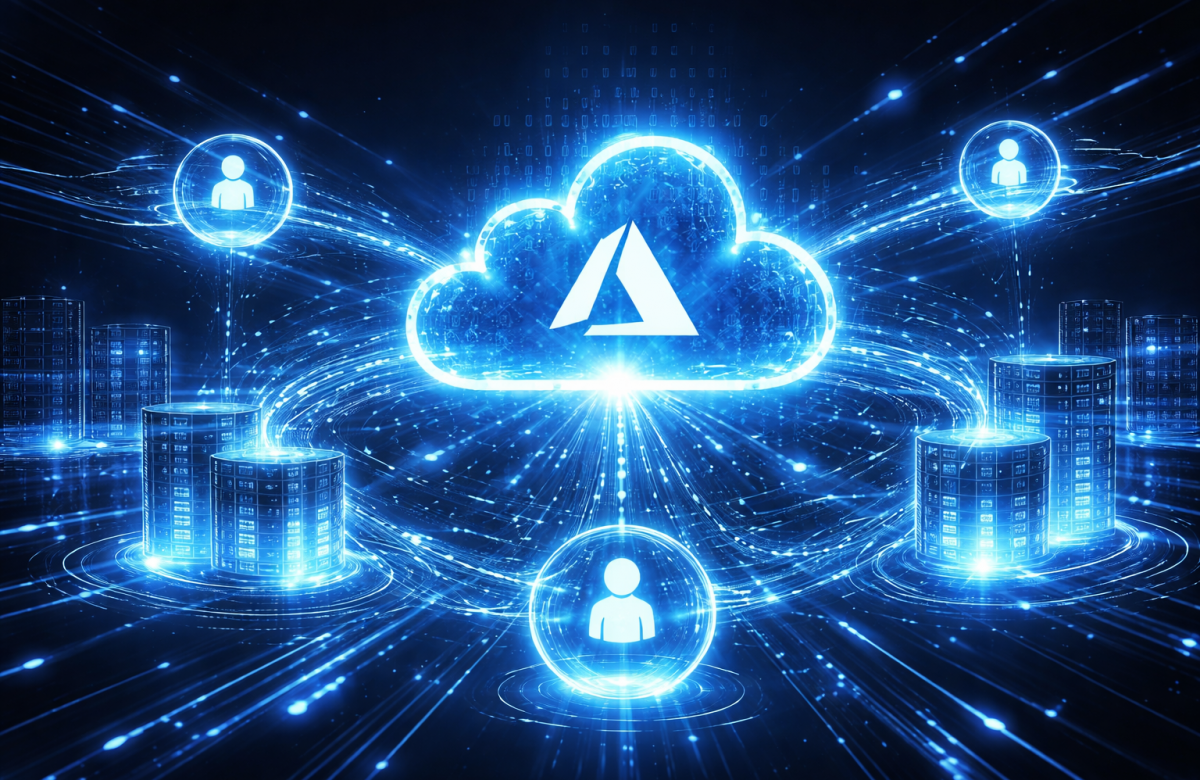
The pace at which artificial intelligence is reshaping enterprise technology is unlike anything we have witnessed before. Microsoft, long at the forefront of cloud innovation, has once again raised the bar with a sweeping series of announcements spanning Azure Copilot, Microsoft Foundry, Fireworks AI integration, and a new generation of agentic tools built for real-world business scenarios.
At Vaden Consultancy, we work closely with organizations across industries to implement and optimize Microsoft Dynamics 365 solutions. That experience gives us a clear lens through which to evaluate these developments — and what we see is genuinely transformative. The lines separating cloud management, AI development, and business operations are dissolving, replaced by an interconnected, intelligence-first ecosystem.
This blog breaks down the most significant updates, explains what they mean in practical terms, and explores how they connect to the broader shift toward intelligent, automated enterprise workflows.
From Assistants to Agents: A Fundamental Shift in How Azure Works
For years, AI tools in the cloud were essentially sophisticated advisors. They surfaced recommendations, answered questions, and generated suggestions — but a human still had to execute every meaningful step. That model is now giving way to something categorically different: AI agents that plan, act, monitor, and adjust without constant human intervention.
Microsoft has introduced six specialized Azure Copilot agents designed to manage the full lifecycle of cloud operations. These include agents focused on migration, deployment, observability, optimization, resiliency, and troubleshooting. Each agent is purpose-built, drawing on Azure Resource Manager data, integrated telemetry, and deep knowledge bases to carry out tasks autonomously while respecting governance guardrails.
What makes this genuinely significant is the orchestration layer sitting above these agents. Azure Copilot does not just hand off a task to a single agent it coordinates across multiple agents simultaneously, adjusting in real time as conditions change. This is what Microsoft describes as ‘agentic cloud ops,’ and it represents a meaningful leap beyond anything offered previously.
For IT teams managing complex environments, the practical benefit is substantial. Routine diagnostics, right-sizing recommendations, and remediation playbooks that once required skilled engineers to execute manually can now support Azure cost optimization by automating and governing operations through a single interface available at no extra cost in the Azure Portal, CLI, and the new Operations Center
The Migration Agent: Turning a One-Time Event into a Continuous Motion
Among the six new Azure Copilot agents, the Migration Agent deserves particular attention. Historically, cloud migration has been treated as a discrete project a defined beginning, a stressful middle, and a hopeful end. The Migration Agent fundamentally challenges that framing.
Now in public preview, the Migration Agent is designed to embed AI across every stage of the migration process: discovery, assessment, planning, and actual deployment. It scans existing environments automatically, maps infrastructure dependencies, identifies legacy workloads, and generates infrastructure-as-code templates in either Bicep or Terraform. What previously took weeks of manual discovery can now be completed far faster, with greater accuracy and less reliance on institutional knowledge held by a handful of specialists.
More importantly, the agent treats migration as an ongoing motion rather than a concluded event. Organizations can use it continuously to assess new workloads, identify modernization opportunities, and maintain a living picture of their infrastructure rather than starting from scratch with every new initiative.
For businesses running SQL Server, Oracle, or PostgreSQL environments, the agent works alongside GitHub Copilot to simplify database modernization. Those migrating VMware workloads or dealing with complex Linux environments will find that the agent handles patching, governance, and compliance automation in a way that previously demanded significant manual overhead.
This is where azure cloud services begin to demonstrate their full depth. The value is not simply in running workloads on Microsoft infrastructure it is in the compounding intelligence layer that makes those workloads easier to move, manage, and improve over time.
Microsoft Foundry and the Fireworks AI Integration: Model Flexibility at Enterprise Scale
Building intelligent applications used to mean committing to a single AI model provider and hoping it met every use case. Microsoft Foundry is steadily dismantling that constraint.
Microsoft has added Fireworks AI to Foundry in preview, enabling fast inference for open-source models and support for custom model deployment. Organizations can now import and deploy their own fine-tuned model versions — including Qwen3-14B and DeepSeek v3.1 — through a dedicated Custom Models workflow within Foundry. This opens the door to highly specialized AI behavior tailored to specific industries, datasets, or regulatory requirements.
The addition of Fireworks AI builds on an already-expanding model catalog. Earlier this year, Microsoft brought Anthropic’s Claude model family into Foundry, making Azure the only major cloud platform offering both OpenAI and Anthropic models under a single governance framework. The result is genuine model flexibility — organizations can select the most appropriate model for each specific task, whether that means prioritizing reasoning quality, speed, cost efficiency, or domain specialization.
For enterprises in regulated sectors like financial services, healthcare, or manufacturing, this matters enormously. Compliance teams are rarely comfortable with a one-size-fits-all AI policy. The ability to deploy different models for different workflows while maintaining unified security, observability, and access controls through Foundry’s Control Plane gives those organizations a credible path to responsible AI adoption at scale.
Foundry IQ, also announced alongside these updates, further strengthens this story. It streamlines knowledge retrieval from sources including SharePoint, Microsoft Fabric, and the web, delivering policy-aware results through Azure AI Search without requiring organizations to build complex custom retrieval pipelines. Developers receive pre-configured knowledge bases and agentic retrieval through a single API, significantly reducing the time from concept to production-ready agent.
Copilot Cowork: Handing Off Complex Tasks, Not Just Getting Answers
Microsoft 365 Copilot has received its own meaningful evolution in the form of Cowork a new mode designed specifically for multistep task execution rather than simple question-and-answer interaction.
The distinction matters. Most enterprise AI deployments today are essentially sophisticated search and summarization tools. They help people find information faster and draft content more efficiently. Cowork is aimed at a higher-order problem: helping users hand off entire workflows to an AI system that will execute them in the background.
Cowork takes a user’s stated goal, builds a structured execution plan, draws context from across Microsoft 365 — including Outlook, Teams, Excel, files, and meetings — through a capability called Work IQ, and then surfaces checkpoints for human approval before taking consequential actions. The result is a system that can meaningfully reduce the administrative burden on knowledge workers without removing human judgment from critical decision points.
For organizations already working with Dynamics 365, this integration opens interesting possibilities. Business processes that span multiple Microsoft tools — from CRM workflows in Dynamics to communications in Teams and documentation in SharePoint — can increasingly be orchestrated by AI rather than coordinated manually across applications and teams.
Security Copilot Gets Smarter: The Agentic Secret Finder
One of the quieter but genuinely important announcements concerns Microsoft Security Copilot, which has reached general availability for a feature called the Agentic Secret Finder
Exposed credentials passwords, API keys, tokens embedded in emails, chat logs, documents, and screenshots represent one of the most underappreciated attack surfaces in enterprise security. Traditional pattern-matching tools generate significant false positives and miss credentials that do not conform to known formats.
The Agentic Secret Finder uses a multi-step reasoning process to identify not just whether a string looks like a credential, but whether it is a valid one and what systems it could grant access to. This shifts security teams from reactive triage toward proactive exposure management, reducing the investigative workload while improving the quality of findings.
For organizations managing hybrid environments or running complex Dynamics 365 deployments alongside Azure infrastructure, credential hygiene is a persistent operational concern. Tools that reason about security rather than simply pattern-match represent a qualitative improvement in the organization’s defensive posture.
HorizonDB and the Data Foundation for AI-Native Applications
Agents need data. The quality, accessibility, and structure of enterprise data directly determines how valuable AI agents can actually be in practice. Microsoft’s introduction of HorizonDB a fully managed, PostgreSQL-compatible database service built for cloud-native and AI workloads — addresses this dependency directly.
HorizonDB includes native vector indexing and AI model management capabilities, making it well-suited for applications that blend transactional data with AI-driven inference. For organizations currently running PostgreSQL workloads on-premises or evaluating modern alternatives to legacy relational databases, HorizonDB offers a path to enterprise-grade performance without sacrificing the open-source ecosystem they rely on.
This connects to a broader theme visible across all of Microsoft’s recent announcements: the infrastructure layer is being redesigned from the ground up with AI as a first-class concern, not an afterthought bolted onto existing systems.
What These Changes Mean for Dynamics 365 Users
Organizations running Dynamics 365 operate at the intersection of business process and technology infrastructure. The developments outlined above have direct implications for how those organizations should think about their platforms and roadmaps.
Intelligent Automation of Business Processes
The agentic capabilities now available through Azure Copilot and Microsoft 365 Copilot are not confined to IT operations. Business processes managed through Dynamics 365 sales pipeline management, service case resolution, supply chain coordination are increasingly candidates for AI Business Solutions and agent-driven automation. Organizations that begin building familiarity with these tools now will be positioned to deploy them across business workflows faster than those who wait.
Data Strategy Becomes Mission-Critical
Foundry IQ and Fabric IQ are only as valuable as the data that feeds them. Organizations with fragmented, poorly governed, or inconsistently structured data will find that agent-driven workflows surface those problems quickly. Investing in data quality and governance now is not an optional preparation for a distant AI future it is a prerequisite for using the tools that are available today.
Governance and Compliance Must Evolve
As AI agents gain the ability to execute actions not just recommend them governance frameworks designed for human-operated processes become insufficient. Microsoft has invested heavily in tools like Agent 365, Foundry Control Plane, and Entra Agent ID to support this transition. Organizations deploying Dynamics 365 should evaluate how their existing compliance and access control frameworks need to adapt to govern AI agent behavior alongside human behavior.
The Broader Architecture: azure cloud development at the Center
Taken together, these announcements paint a coherent picture of where Microsoft sees enterprise technology heading. azure cloud development is no longer simply the practice of building and deploying applications in a cloud environment. It now encompasses the creation, governance, and operation of intelligent agent systems that interact with business data, execute workflows, and reason about complex decisions.
For partners and customers working with Microsoft technologies, the practical implication is that the skill sets, architectures, and governance practices that will differentiate successful organizations over the next several years look meaningfully different from those that drove success over the past decade. The organizations that treat AI as a capability to be deliberately integrated into their operating models rather than a feature to be switched on will extract the greatest value from what Microsoft is building.
How Vaden Consultancy Can Help
At Vaden Consultancy, we help organizations navigate exactly this kind of transition. Our expertise in Dynamics 365 solutions is grounded in a deep understanding of how Microsoft’s broader platform including Azure, Microsoft 365, and now the emerging AI agent ecosystem works together to create business value.
Whether your organization is evaluating a migration to Azure, looking to unlock AI capabilities within your existing Dynamics 365 deployment, or trying to build a governance framework that can scale alongside intelligent automation, we bring the practical experience and technical depth to help you move forward with clarity and confidence.
The announcements covered in this blog are not distant promises on a product roadmap. Many of these capabilities are in preview or general availability right now. The question is not whether your organization will encounter them it is whether you will approach them proactively or reactively.
We would welcome the opportunity to discuss how these developments apply to your specific environment and objectives. Reach out to the Vaden Consultancy team to start that conversation.
Follow VADEN Consultancy on LinkedIn for more insights on Microsoft Dynamics 365, Business Central, Power Platform, Power BI, AI, Azure Cloud, CRM, ERP, automation, cybersecurity, and business technology.